What Causes Scuffing and Discoloration of White Sidewall Tires?
White stripe and raised-letter tires scuff curbs and yellow with age. How white sidewalls are made, why they discolor, and how to clean them safely.
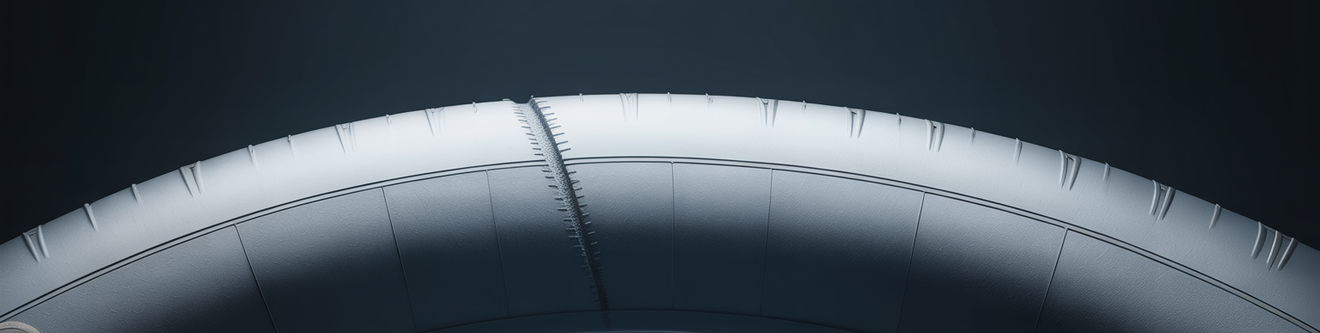
White sidewall tires — including white stripe, raised white letter, and outline white letter styles — are a classic styling cue that goes back nearly a century. They're still found on certain luxury vehicles, classic restorations, hot rods, and some light trucks. But white rubber is fragile cosmetically: it scuffs, yellows, and stains in ways that black sidewalls don't. Here's what's actually happening, and what to do about it.
How White Sidewalls Are Made
Modern whitewall and white-letter tires use a sandwich construction. An underlying layer of white rubber wraps the styled section of the sidewall around the full circumference. On top of that white layer sits a thin layer of abrasion-resistant, non-staining black rubber. The mold has recesses where the white styling will appear; during curing, both the black and white rubber flow into the recesses. After the tire cools, fine-grit grinding wheels remove the top layer of black rubber from the raised portions of the molded design, revealing the white rubber underneath.
That non-staining black topcoat exists for a reason — black tire rubber contains compounds that would otherwise migrate into and stain the white layer. The whole design is a chemistry compromise: enough black rubber to protect the white, but thin enough where the white shows through that a quick grind exposes it cleanly.
Why Scuffing Happens
The most common cosmetic damage on white sidewalls is curb scuffing. When the sidewall rubs against a curb, parking block, or other hard object, the protective black topcoat around the white styling can be worn through. The underlying white rubber then gets exposed in unintended places, leaving uneven white smudges or scrapes that read as damage.
Cosmetic sidewall scuffing doesn't reduce the structural integrity of the tire — the load-carrying cords and the bead are unaffected by a surface scrape. But it looks bad enough that some owners have shops dismount the tires and remount them inside-out so the damaged whitewall faces inward, hidden under the vehicle.
Why Whitewalls Turn Brown or Yellow
Discoloration is the second classic problem. White sidewalls can yellow, brown, or develop a hazy stain over months and years even without any physical contact. Two chemistry mechanisms are responsible.
Antiozonant migration
All modern tire rubber contains antiozonants — typically para-phenylenediamine (PPD) derivatives — added to the compound to protect the tire from ozone in the atmosphere, which would otherwise crack the rubber. Antiozonants work by migrating slowly to the surface of the tire over time, where they react with ozone before it can attack the rubber itself. They're naturally brown or yellow-brown.
On a black tire that migration is invisible — and you can actually see it as the faint brown haze ("tire bloom") on a black sidewall after a few months. On a white sidewall, that same brown migration shows up clearly, gradually yellowing the white rubber from the inside out. The chemistry that protects the tire from premature cracking is the same chemistry that stains the cosmetic white.
Oil contamination
White rubber will also turn brown if it comes into direct contact with petroleum oils in adjacent black rubber. That's why the protective black topcoat over the white styling is specifically a non-staining compound, and why tire shops are taught to store white sidewall tires white-to-white and black-to-black — never with a whitewall stacked face-to-face against a regular black sidewall. Oil and softener compounds in the black rubber will leach into the white over a few weeks of contact in storage.
How to Clean White Sidewall Tires
Yellowed and stained whitewalls can usually be brought back to bright white with the right cleaning approach. The wrong approach can permanently damage the tire.
What works
- Mild dish soap and warm water — for routine cleaning, a soft-bristle brush, soap, and warm water removes most surface grime without harming the rubber.
- Dedicated whitewall cleaners — products like Bleche-Wite, Westley's Bleche-White, or any commercial whitewall cleaner are formulated to lift antiozonant browning without attacking the rubber. Apply, agitate with a brush, rinse thoroughly.
- Magic-eraser-style melamine foam — used gently on small stained spots, melamine sponges can remove stubborn yellowing without harsh chemicals. Don't scrub aggressively.
- Rinse and dry promptly — never let cleaner sit on the rubber for extended periods, and rinse off completely. Any cleaner left on the rubber accelerates degradation.
What to avoid
- Bleach and chlorine cleaners — chlorine attacks the rubber polymers and accelerates cracking and dry-rot. Even diluted bleach is a bad idea.
- Solvents and harsh chemicals — degreasers, brake cleaner, acetone, and similar solvents strip the protective antiozonant compounds out of the rubber and shorten the tire's life.
- High-pressure washers up close — keep the nozzle at least 12 inches from the sidewall and use a wide spray pattern. Concentrated pressure-washer streams can erode the rubber and force water into small cuts.
- Wire brushes and steel wool — they'll remove the staining but also remove the rubber itself and leave scratches that pick up dirt faster.
Preventing Discoloration and Damage
- Park in the shade when possible — UV light accelerates antiozonant migration and rubber degradation. Garaged or shaded vehicles keep their whitewalls bright longer.
- Clean monthly, not yearly — light, frequent cleaning is far easier than waiting for years of antiozonant browning to build up. A quick soap-and-water rinse every month or two prevents most staining.
- Park straight, leave room — most curb scuffs happen when parallel parking close to the curb or pulling into a tight angled space. A few extra inches of clearance saves the cosmetic finish.
- Mind storage if you swap seasonally — if classic-car whitewalls live in winter storage, stack them white-to-white and black-to-black, or store them vertically in tire racks so the sidewalls don't touch each other.
Some brands of whitewall tires age better than others — the proprietary blend of antiozonants and non-staining compounds varies between manufacturers, and a tire designed for the classic-car restoration market will usually stay whiter longer than a budget light-truck whitewall. When you're ready to replace, search your tire size or vehicle on SearchTires to compare drive-out prices on whitewall and raised-white-letter tires from shops near you.
Frequently Asked Questions
Can a scuffed whitewall be repaired?
Why does my whitewall look brown only on one side?
Are whitewalls still made for modern cars?
Does cosmetic scuffing void a tire warranty?
Related Topics
Explore more tire-care and tire-knowledge topics:
- Decoding Your Tire Placard — A field-by-field guide to the sticker on your door jamb.
- Flat Tire Statistics — How often tires go flat, and what causes most blowouts.
- Tire Safety & Blowout Statistics 2026 — NHTSA-sourced data on tire-related crashes and failures.
- Tire Noise: How Tread & Tech Affect Sound — Why tires hum, growl, and how noise-cancelling tires keep cabins quiet.
Sources
Technical and chemistry references for this article come from tire-industry associations, materials-science references, and tire-manufacturer technical guides.
- U.S. Tire Manufacturers Association (USTMA) — Tire Care & Safety — industry guidance on tire inspection, care, and storage, including avoiding heat, sunlight, petroleum products, and ozone-generating equipment.
- Tire Industry Association (TIA) — installer-facing best practices for tire storage and handling of specialty (whitewall, raised white letter) tires.
- U.S. Patent 3,009,899 — Rubber containing para-phenylenediamine antiozonants — foundational chemistry patent describing how PPD-based antiozonants protect rubber by migrating to the surface.
- Coker Tire — Classic and Whitewall Tire Catalog — the largest U.S. supplier of classic-car whitewall, wide-whitewall, and raised-white-letter tire reproductions.
- Black Magic — Bleche-Wite Tire Cleaner — official product page for the long-running whitewall and tire cleaner used by detailers.
- NHTSA — Tire Safety (TireWise) — federal guidance on tire safety, inspection, and replacement criteria.
- Rubber News (Crain Communications) — trade publication covering rubber chemistry, tire industry developments, and materials science.
Whether you drive a vintage classic, a luxury sedan, or a light truck with raised white letters, search your tire size or vehicle on SearchTires to compare drive-out prices on the right whitewall or RWL tire for your vehicle at shops near you.
© 2026 SearchTires.com