How Long Do Tires Last?
Most tires last 25,000-50,000 miles and 6-10 years. Use the penny trick, watch tread depth and the date code, and replace before the wear bars show.
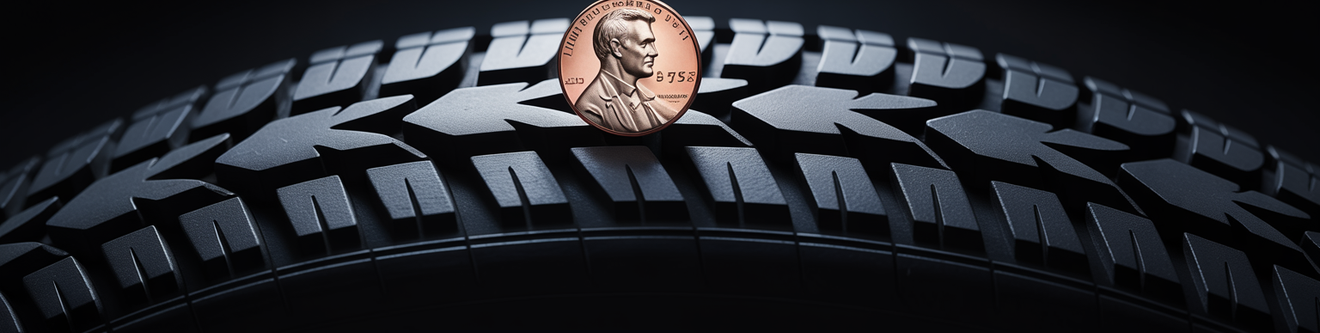
Everything you need to know about how long your tires will last and why
In 2021, the NHTSA estimated 622 motor vehicle accident fatalities occurred due to tire-related issues. Considering that the tires are the only part of the vehicle touching the road surface, they must remain in good condition. How long do tires last and what factors affect the lifespan?
As a mechanic for several decades, I’ve seen the majority of people neglect their tires for far too long, putting themselves and others at risk for a serious accident. This guide offers practical guidance on the life of car tires. We show you what affects the life of the tires, discuss average lifespans and list signs that it’s time to replace the tires.
What is the Life Expectancy of a Tire?

On average, expect tires to last anywhere from 25,000 to 50,000 miles. Using high-quality tires and ensuring all maintenance is performed can change the lifespan to 75,000 miles. Monitoring tire wear is essential to determining how long they will last.
After spending money to install new tires, it’s natural to want to know how long they will last, ensuring you get the best investment out of your purchase. The problem is that nobody can give you a definitive answer because tire lifespan varies greatly due to several factors.
How does the average lifespan differ between all-season and performance tires?
Even though performance tires are hailed as the better option, there’s no indication that they last longer than all-season tires. While they will provide better traction for cars that have a need for speed, the rubber is going to wear at essentially the same rate.
Is there a noticeable lifespan difference between cheap tires and expensive tires?

Yes, obviously, better construction equals more durability, so you can expect a longer life from the expensive tires. Depending on what they are made for, you can also count on them to perform better. We touch on this subject more deeply in a few minutes.
Factors Affecting Tire Lifespan
What factors can significantly shorten the average lifespan of a tire? The most critical factors affecting the lifespan of the tires include driving habits, maintenance, tire quality, climate and road conditions, all of which can lead to premature tire wear.
1. Driving Habits

Just going for a nice slow drive to the store
One of the most important factors is how you drive, with these aspects being the most influential:
- Speeding: The faster you drive, the more heat gets generated. As the tires get warm, wear increases.
- Abrupt braking: Braking while traveling at high speeds increases wear.
- Aggressive driving: When you brake hard or accelerate quickly, there’s added stress put on the tires.
- Overloading the vehicle: When the maximum load capacity is exceeded, added strain is put on the tires.
- Cornering: The tires wear faster and unevenly while taking corners at higher speeds, especially on the outer edges.
Because many bad driving habits occur more frequently in the city, such as abrupt braking, tires often wear faster in urban environments than they do on the highway. By maintaining regular speeds and driving less aggressively, the tires will naturally take longer to wear down.
The moral of the story is – if you aren’t going to drive reasonably, you can expect to go through more tires than the person that’s not in a hurry.
2. Maintenance

As with any car part, proper maintenance determines how long the tires will last. Just as you wouldn’t neglect to change the oil, tire maintenance must be a priority. My professional opinion is that you should be putting just as much focus on the tires as you do on the engine or brakes, if not more.
On average, you want to check the tire pressure every month. It should also be checked whenever the temperatures change drastically. Check the pressure before driving when the rubber is still cold for the most accurate reading.
Tire rotation should be performed every 6,000 to 8,000 miles with most brands, but some require it more frequently. Rotating the tires helps the tread to wear evenly. While you could rotate the tires at home, visiting a professional is generally best.
Wheel alignment should be performed every two to three years unless there have been changes to the wheels or suspension. If you regularly hit potholes or curbs, you may want to have the wheel alignment checked more frequently.
3. Tire Quality

The quality of a product’s build always affects its lifespan. The same principles apply to tires as any other products, from clothing to household appliances. You can’t purchase cheap, poorly-made tires and expect they will provide a long life.
Many people try to get off by purchasing cheap tires, thinking they’ve saved a buck, but that’s not usually the case. Those tires wear out faster than the high-quality tires, leaving them subject to replacement sooner and ultimately costing more money. I understand the need to save money, but it’s never worth sacrificing long-term savings or the reliability of the tire.
There’s a significant difference between all-season tires from winter or summer tires. These types contain different tread patterns, features and rubber compounds to ensure maximum performance during certain conditions. Cooper Tire defines the all-season tire as the best option for longevity.
Here are a couple of considerations to think about:
- Tread compound: All-season tires use a tread compound that perfectly balances traction and durability for different conditions, while winter (snow) tires have a softer compound, so the tire remains pliable in colder temperatures. While winter tires enhance traction in slippery conditions, they wear faster in warm weather. Summer tires are the opposite, with harder rubber for optimal performance when it’s warm, but these tires have a shorter lifespan than all-season.
- Driving conditions: All-season tires hold up well in various conditions, while winter and summer tires are meant for the seasons they are named for. Driving either of the tires in the opposite condition leads to premature wear and decreased performance.

The tread pattern dictates the tire’s performance and the conditions in which it’s made for. Most common on passenger vehicles are symmetrical tires, which are good for dry roads because of the continuous pattern.
Directional tread patterns roll forward in one direction, with lateral grooves meeting in the middle. Many all-season or winter tires have directional tread, providing good traction in snow or mud, but have varying lifespans depending on how they are used.
The asymmetrical pattern has two distinct sides, one for water displacement and the other for stiff rigidity. As these are used for ultra-high-performance cars, the tread isn’t going to hold up as well because of the unbalanced pattern.
Aside from the patterns, lifespan is also affected by the tread depth and overall design:
- Tread depth: The depth determines the traction provided when traveling through water. These channels push water away from the surface to prevent hydroplaning. In general, tires with deep tread last longer because there’s more rubber to wear down.
- Tread design: Patterns can include various elements, such as blocks, sipes and grooves, all of which affect the lifespan. Deeper grooves keep water from the tires better. Sipes are thin slits to provide more bite and traction, while the tread blocks are the raised part of the pattern that makes contact with the road. Aggressive block patterns wear faster on dry roads, even though they hold up well off-road.
While this all sounds very confusing, it doesn’t have to be. For most people driving in typical road conditions, a high-quality all-season tire is what’s recommended.
4. Climate and Road Conditions

You don’t want to drive on the wrong tires for your climate and average road condition. Doing so shortens the lifespan and can have disastrous consequences.
Here are some things happening to tires in hotter weather conditions:
- Overinflated tires blow out easier in hot weather because of the increased internal pressure.
- As the air outside the tire expands because of hotter temperatures, the pressures in the tire also increase.
- Extended exposure to UV radiation and sunlight degrades the rubber, leading to dry rot and cracking.
Other dangers exist in colder climates:
- Tire pressures drop with colder weather, leaving them underinflated, which makes them more prone to uneven wear.
- Rubber compounds become stiff and less flexible as the temperatures decrease, leading to a loss of traction.
- Road salt and ice can cause wear or damage to the rubber.
You shouldn’t drive on winter tires in the summer. Because the rubber is made for colder temperatures and extreme weather such as snow and ice, using them in warmer temperatures can decrease traction, lead to longer braking distance and cause excessive wear. Because winter tires also contain higher rolling resistance than all-season or summer tires, you spend more on fuel while using them.
Summer tires always wear faster in cold conditions because the rubber becomes harder and less flexible, struggling to maintain traction on snowy or icy surfaces. They are meant to perform at temperatures above 45°F (7°C) and will quickly degrade when the weather drops lower.
There’s also the safety issue to think about. If you are sliding all over the road because you can’t maintain grip, you put yourself and others at risk.
Aside from the temperature, other road conditions affect tire lifespan. While you may not have a lot of control over road quality in your area, here are some situations to avoid when possible.
- Uneven/rough pavement: When the surface is worn out, cracked or has potholes, added vibration and impact affect the tread life.
- Unpaved gravel/dirt roads: Loose gravel causes punctures and abrasion and can lead to debris impacting the tires. Uneven surfaces also increase the rolling resistance and add stress to the sidewalls.
- Construction zones: Not only are these roads often uneven and torn up, but they can be filled with screws, nails and other sharp objects that can puncture the tires.
- Chemically-treated roads: When the roads are treated with salt or brine, deterioration and corrosion of the rubber accelerates. These substances also cause wear to the rims.
Signs Your Tires Need Replacing
How do you know when the tires need to be replaced? Even though you aren’t a professional mechanic, checking tire wear is a simple task that can be done at home. It’s one of the most important checks I recommend as a mechanic. Regular inspections can tell you when it’s time to change or rotate the tires. Some important factors to consider are tire depth, visible wear, vibration and tire age.
Legal tread depth in the United States is 2/32 of an inch (about 1.6 millimeters). While this is the legal limit, most manufacturers recommend replacing the tires at 4/32 of an inch to ensure safety and maximum performance.
The new car tire usually has a tread depth between 10/32 and 12/32 inches. Light trucks can have tread depth measuring up to 19/32 inches.
Want a quick way to check your tire tread depth? Try the Penny Trick! Insert a penny upside-down into a tire groove. If you can see the top of Lincoln's head, your tread is likely too shallow and your tires may need replacing.
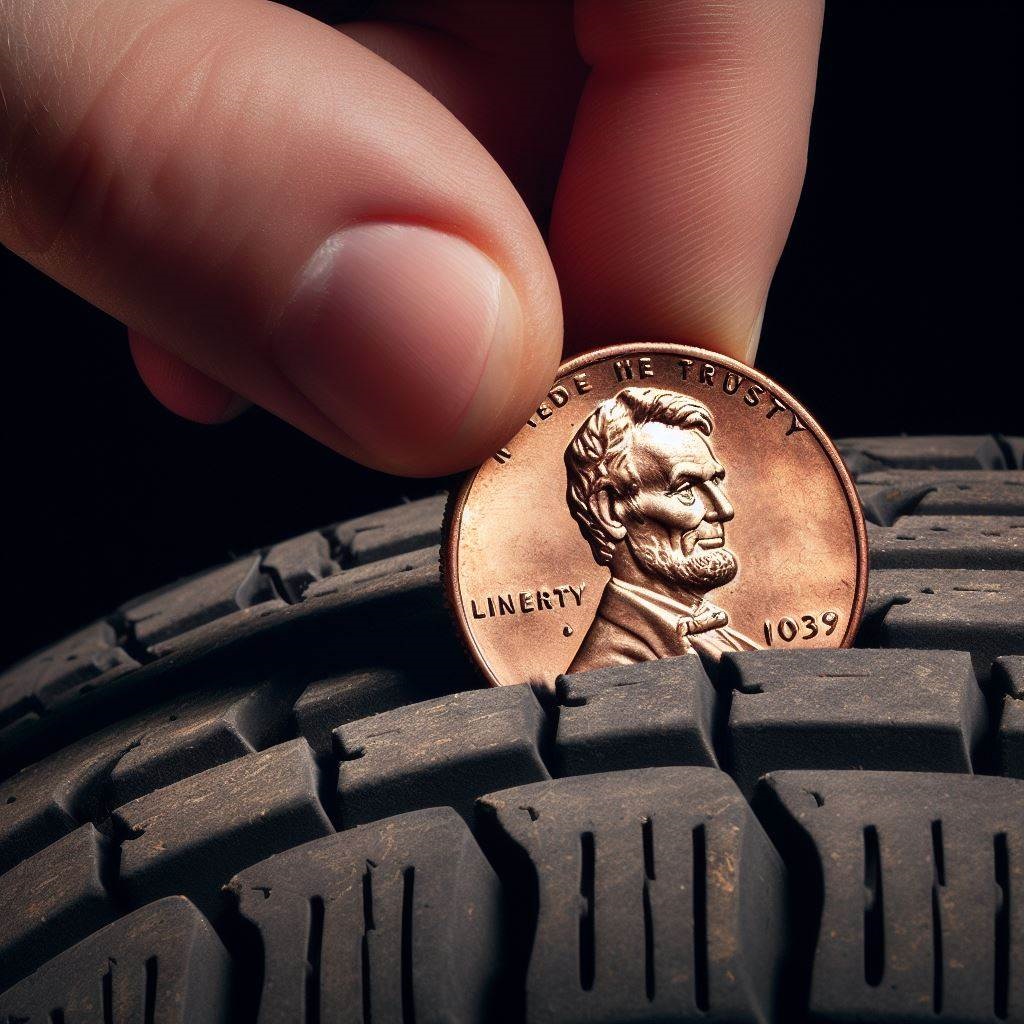
For a more precise measurement, use a tire tread depth gauge. These small tools measure tread depth accurately in millimeters or 32nds of an inch. You can check the depth yourself or stop at a tire shop to have them inspected. Honestly, it’s easier for most people to swing into the tire shop every so often and get the free check that’s offered.
When to Use Which Method:
- Penny Trick: Good for a quick check. If you can see the top of Lincoln's head at any point, your tires definitely need attention.
- Tread Depth Gauge: Provides more precise measurement.
- This is ideal for determining if your tires are close to the legal minimum tread depth (usually 2/32”) and for monitoring wear patterns to spot if your tires may be out of alignment.
Where is tread depth measured? Insert the tread depth gauge or penny into the groove until it reaches the bottom. Repeat in multiple spots along the tire's tread, including the edges, intermediate area, and center, to assess overall wear.
Aside from checking the tread depth, it’s also essential to check for signs of abnormal wear. You want to look for uneven tread patterns, exposed wear bars, bulging or cracks and foreign objects in the rubber.
- Uneven tread pattern: Excessive shoulder or center wear usually indicates an issue with alignment or inflation. Feathering, cupping and scalloping also occur because of failure with the suspension, bad wheel balancing or poor alignment.
- Exposed wear bars: Tires may have built-in indicators in the tread grooves to tell you when they are getting too low. When these indicators are seen, it’s time to get new tires.
- Bulges/cracks: If the tread surface or sidewall has bulges, cracks or bubbles, there may be damage to the structure and it’s time for a replacement.
Foreign objects: Any foreign objects in the tire can cause permanent damage. Look for stones, screws and nails often.
If you notice any of the above symptoms, having the tires looked at right away is critical. Not only is your safety compromised, but there’s a chance that the tire could be saved, either through repair or rotation. Continuing to let the tires wear abnormally only means more frequent replacement.
Uneven wear shows up in multiple ways, depending on what’s causing it. You may see cupping or scalloping, feathering, and wearing on one side, as well as center wear, edge wear, and patchy wear. You may also notice vibration, poor handling or increased road noise as a result.
No one expects you to discern every problem based on the tire wear, but there’s an explanation for each one. By recognizing the differences, you can prevent future wear and save the existing tread simply by taking action.
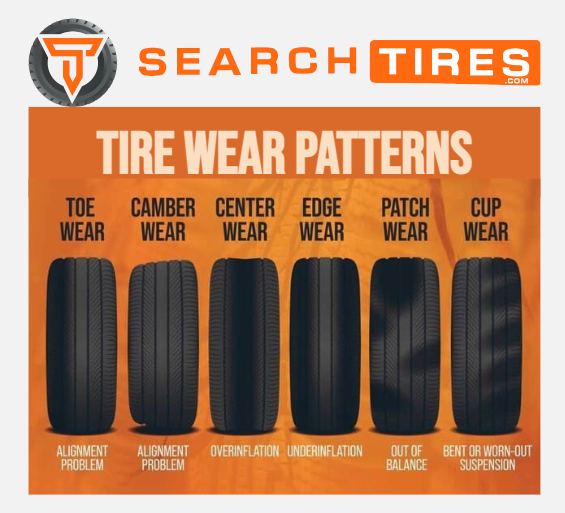
- Cupping/scalloping: You’ll notice dips around the tire tread circumference, usually caused by improper inflation, misalignment, or worn suspension parts.
- Feathering: If you see the edges of the tread ribs look rounded to one side but are sharper on the other, it’s known as feathering. This is often caused by bad suspension parts or misalignment, specifically improper toe settings..
- Camber wear (One-sided wear): When the inside or outside edge of the tread wears significantly faster than the opposite edge, it's camber wear. This is usually caused by improper camber settings or trouble with the suspension.
- Toe Wear (One-sided wear): Incorrect toe settings (toe-in or toe-out) cause the tire to drag slightly sideways as you drive. This leads to one-sided tread wear and can also create a feathered appearance on the tread blocks.
- Center wear: Overinflation causes center wear, leading to a ballooning of the tire. It can also be the result of aggressive driving or using the wrong tire size.
- Patchy wear: If there are patches of wear in random spots across the tread, it indicates that some parts of the tire are used more than others. This is usually caused by tire balancing issues, a bad wheel bearing, or worn suspension parts.
When a tire wears unevenly on the inside only, there’s usually a problem with the alignment. However, if it’s wearing on both the inner and outer edges evenly, the tire may be underinflated. Inflation issues have been among the top problems I’ve seen as a mechanic, and the problems are easy to remedy simply by checking pressure often.
No one wants to shake, rattle and roll while heading down the highway. If you feel a vibration while heading down the road, you must pay attention.
The tires may be imbalanced or damaged. Otherwise, more serious mechanical issues could be to blame, such as a brake issue, defective suspension, bad wheel bearings or a drivetrain problem. It’s best to have a professional take a look to determine what’s wrong.
If you feel vibration and shaking, it’s never safe to continue driving. As long as you’ve confirmed that the vibration isn’t coming from the road, you should have your vehicle looked at immediately.
The shaking sensation alone isn’t enough to indicate problems with the tires. In fact, it can be caused by bad engine mounts, drivetrain issues or an engine misfire. Tire issues would also exhibit uneven wear and cause poor handling.
To differentiate between the symptoms of a tire issue and other mechanical concerns, it’s best to seek professional help.
Tires degrade even if they aren’t being used. You may think the tires will last 20 years if you only drive 1,000 miles a year, but that’s not true. Most manufacturers recommend replacing tires every six to ten years, regardless of tread depth.
Tires dry rot and crack after sitting around, especially if they are stored in direct sunlight or around hazardous materials. Driving on dry rotted tires can lead to a blowout, even if there’s plenty of tread depth to be considered legal.

The tire date code is found on the sidewall. Its final four digits indicate when the tire was made, for years after 2000. The first two designate the week of the year, while the last two are the year. As an example, we have a date code of 1120, meaning:
- 11 – was made the 11th week of the year.
- 20 – indicates the year they were made was 2020.
Sadly, I’ve seen people buy tires that were already several years old. It’s important to check the date of manufacture when you buy tires, especially if you don’t buy them from a reputable dealer.
Tires with low mileage may last longer if the car is parked away from the elements in a garage. However, it’s never recommended to drive on tires that are ten years old.
Even if you store the tires properly, you’ll want to replace them every six to ten years. Here are some steps to take if you need to store tires:
- Clean tires: Before storing them, clean them off with mild soap and water, carefully removing all the dirt.
- Inspect the tires for damage: If there is any sign of damage, the tire needs to be repaired or replaced.
- Check pressure: Store the tire with the recommended pressure as per the manufacturer. This step ensures they retain their natural shape.
- Use a tire rack or bag: These storage options keep contaminants from getting on the tires.
- Rotate tires often: Move the positioning of the tires every few months to prevent flat spots. Check the pressures during this time and adjust as needed.
- Keep tires out of sunlight and away from heat: Sunlight and heat can cause aging.
You can store the tires vertically or horizontally. If you store them vertically, secure them side by side, making sure they won’t tip over. If you prefer storing horizontally, you can stack them on top of one another, but don’t go too high, as it could cause a lot of pressure on the bottom tire.
Tips for How to Maximize Tire Lifespan
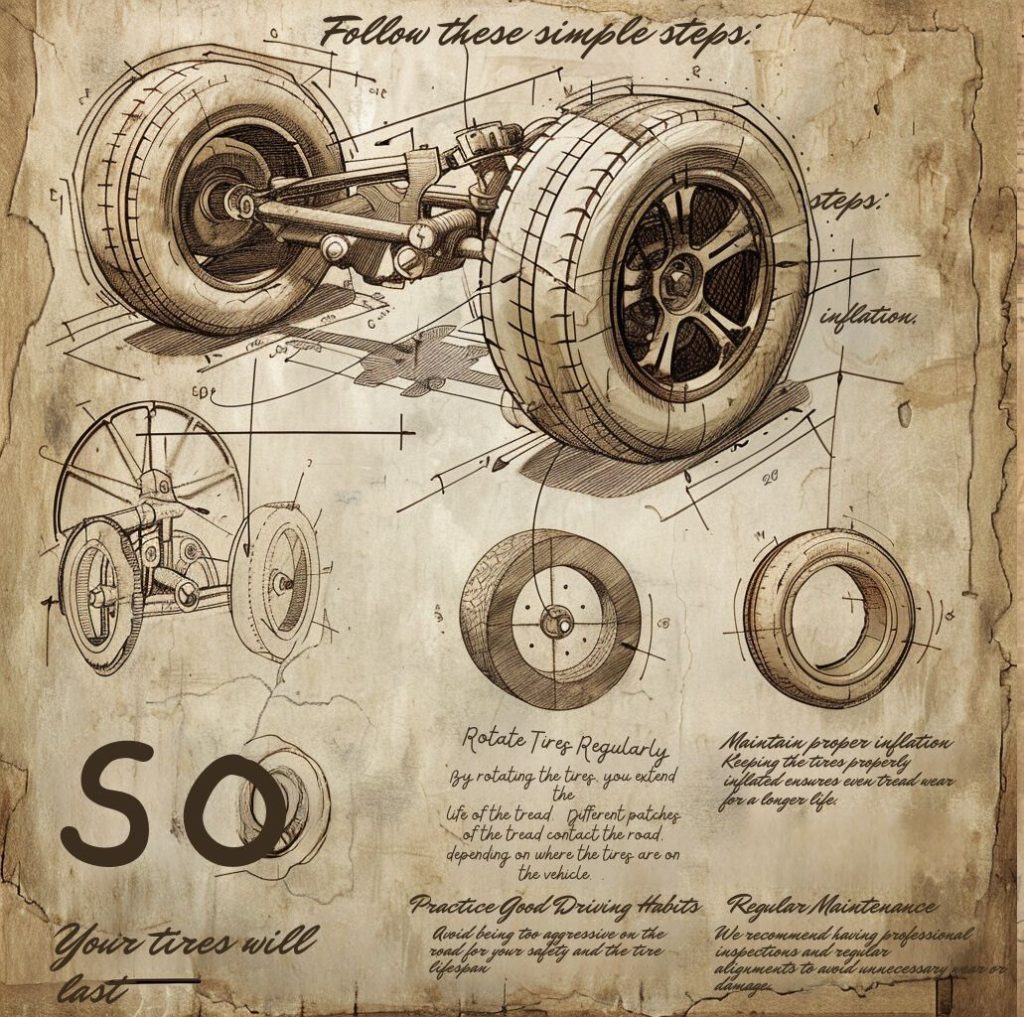
If you want the tires to last, follow these simple steps: maintain proper inflation, rotate your tires regularly, practice good driving habits, schedule regular maintenance, and choose the right tires.
Keeping the tires properly inflated ensures even tread wear for a longer life. Find the recommended tire pressure in the owner’s manual or on the driver’s side door placard. We recommend checking the tire pressures monthly or anytime the weather changes significantly. Tire pressures should always be checked and adjusted when the rubber is cold before you start driving.
Driving on under or overinflated tires can have disastrous consequences. You could end up with a flat tire or a blowout, either of which can lead to an accident.
Underinflation causes the edges of the tire to wear prematurely, while overinflation causes the center to wear more.
When the tires aren’t inflated properly, the ride quality changes. You may notice more bumps and road imperfections. There could also be noise coming from the road that you didn’t hear before.
By rotating the tires, you extend the life of the tread. Different patches of the tread contact the road, depending on where the tires are on the vehicle. By moving it around, you keep the tread wear at an even rate.
Tire rotation is recommended every 6,000 to 8,000 miles with most brands. If you drive in severe conditions, you may require more frequent tire rotation. Check with the tire manufacturer or local professional to determine the appropriate interval.
While it may be possible to rotate the tires at home, visiting a professional is generally best. There are varying tire rotation patterns that can only be used on certain vehicles and the experts know what’s best.
Avoid being too aggressive on the road for your safety and the tire lifespan. Try accelerating and braking slowly to maintain the tire tread. Today’s adaptive cruise control systems help maintain adequate speeds to prevent accidents, but they also serve a dual purpose by taking care of the tires.
When driving, it’s important not to overload your vehicle. Take out gear at the end of the day that isn’t needed, instead of storing it in the car. It’s also best if you can drive your car on highway routes vs. through the city. If you have the choice, go with the highway option instead, which also improves fuel economy.
If you can look ahead and anticipate when traffic is coming to a stop, you can apply the brakes gently and reduce speed gradually. Not only will the people in the car appreciate the gentle drive, but your tires will have a longer life. This method also helps to prolong the life of the brakes.
We recommend having professional inspections and regular alignments to avoid unnecessary wear or damage. The car may also need tire balancing and regular rotation.
The most common symptoms associated with bad wheel alignment include the following:
- Vehicle pulls to one side
- Uneven tread wear
- Steering wheel sits off-center
- Vibration of the steering wheel
- Harder to control vehicle
- Increased fuel consumption
- Abnormal noises from the tires
Consider having the wheels aligned if you notice any of the above symptoms. With none of these symptoms, a wheel alignment should be checked yearly. At the same time, the technician can check the tire pressure and tread wear. As a technician, I assure you that you won’t be bothering us to check the alignment or pressures. We would rather do an unnecessary check than see tires that could have lasted longer if only they had been taken care of.
Changing the tires won’t automatically mean an alignment is necessary, but it should still be checked to ensure maximum life out of the tread. We also recommend having the alignment checked after any suspension parts have been replaced.
Without specialized equipment, it’s difficult to check wheel alignment at home. The best you can do is perform a visual inspection of the tires and steering wheel to see if they appear straight. Beyond that, you need to trust the feel of the car. If it’s pulling to one side or seems to be off, it’s best to have a professional take a look.
Whenever you have tire service performed, the inflation and tread should be inspected. At the same time, the technician will tell you if it’s time for wheel alignment, balancing or rotation.

Above all, you want to choose the right tires for your vehicle, climate and driving style. Consider investing in a high-quality brand, not only for longevity but also for the performance benefits. If you purchase tires online, read through customer reviews first. Also, follow the tips given to you from a tire professional to ensure maximum tread life.
Winter (snow) tires are meant for driving in cold climates with ice or snow. Summer tires are best for dry weather and warmer temperatures. The all-season tire provides a balance between the two, offering optimal handling and traction in a variety of driving circumstances.
You could switch to winter tires once temperatures drop below 45°F (7°C) to prepare for upcoming snow and ice. At the same time, you would switch back to your summer tires when the temperatures exceeded 45°F (7°C).
Tire load rating is also referred to as the load index, indicating the maximum weight that the tires support with proper inflation. The load rating is found as a value on the sidewall, followed by the size designation. You need to use the proper tire load rating for your vehicle and make sure you don’t overload the vehicle beyond what the tires can handle.
Conclusion

With so much riding on your tires, there’s no room for error. Take your safety into your own hands by regularly checking the tires and seeking professional support when needed. While the tires may last 25,000 to 75,000 miles, you can encourage the latter by taking action at the first sign of problems and by being proactive with maintenance.
Frequently Asked Questions
How many years do tires last if I barely drive?
What is the legal tread depth in the US?
How does the penny trick work?
Do all four tires need to be replaced at the same time?
Are expensive tires really worth it?
How often should I rotate my tires?
Can I drive on 10-year-old tires with good tread?
Find the Right Replacement Tires
When the tread runs out, the date code creeps past six years, or any of the wear patterns above show up, the answer is the same: replace the tires before they leave you stranded. Before you buy, search your tire size or vehicle on SearchTires to compare full drive-out prices — installation, balancing, valves, and disposal all included — across local shops and online retailers near you.
Related Topics
Dig deeper into tire wear, replacement, and what to buy next:
- Tire Safety & Blowout Statistics — What goes wrong when tires age out, by the numbers.
- Flat Tire Statistics — How often tires fail and what causes it.
- Tire Price Statistics 2026 — What replacement tires actually cost across types and sizes.
- Tire Size Popularity Statistics — Most common US tire sizes — useful when shopping for replacements.
- Tire Recycling & Environmental Statistics — What happens to your tires after you replace them.
Methodology and Sources
Tire-life ranges, tread-depth thresholds, rotation cadence, and aging guidance are compiled from manufacturer documentation and the federal safety and industry bodies that publish tire-care research. We update this article annually; if you spot a figure that has shifted, let us know.
Government and safety research
- National Highway Traffic Safety Administration (NHTSA) — federal authority on tire safety, recalls, and crash data.
- U.S. Tire Manufacturers Association (USTMA) — replacement-market data, tire-care guidance, and industry standards.
- AAA Newsroom — roadside-service data, including flat-tire and tire-failure incidence.
Manufacturer tire-care guidance
- Michelin — tire tips and advice — manufacturer guidance on tread, rotation, and aging.
- Bridgestone — service intervals and recommended replacement windows.
- Goodyear — tread-wear indicators and care-and-maintenance documentation.
Independent testing and consumer reviews
- Consumer Reports — tire buying guide — treadwear testing, tire-type explainers, and ratings.
- Tire Rack — Tire Tech Information — long-running independent tread-depth and tire-aging reference library.
© 2026 SearchTires.com
- AAA Newsroom — public-facing AAA research releases on tire failure and roadside service.
- Tire Business — tire-industry trade reporting; Top 75 Tire Makers and replacement-market data.
- Modern Tire Dealer — independent dealer-channel reporting on tire trends.
Before you buy your next set of tires, search your tire size or vehicle on SearchTires to compare full drive-out prices — installation, balancing, valves, and disposal included — across local shops and online retailers near you.
© 2026 SearchTires.com